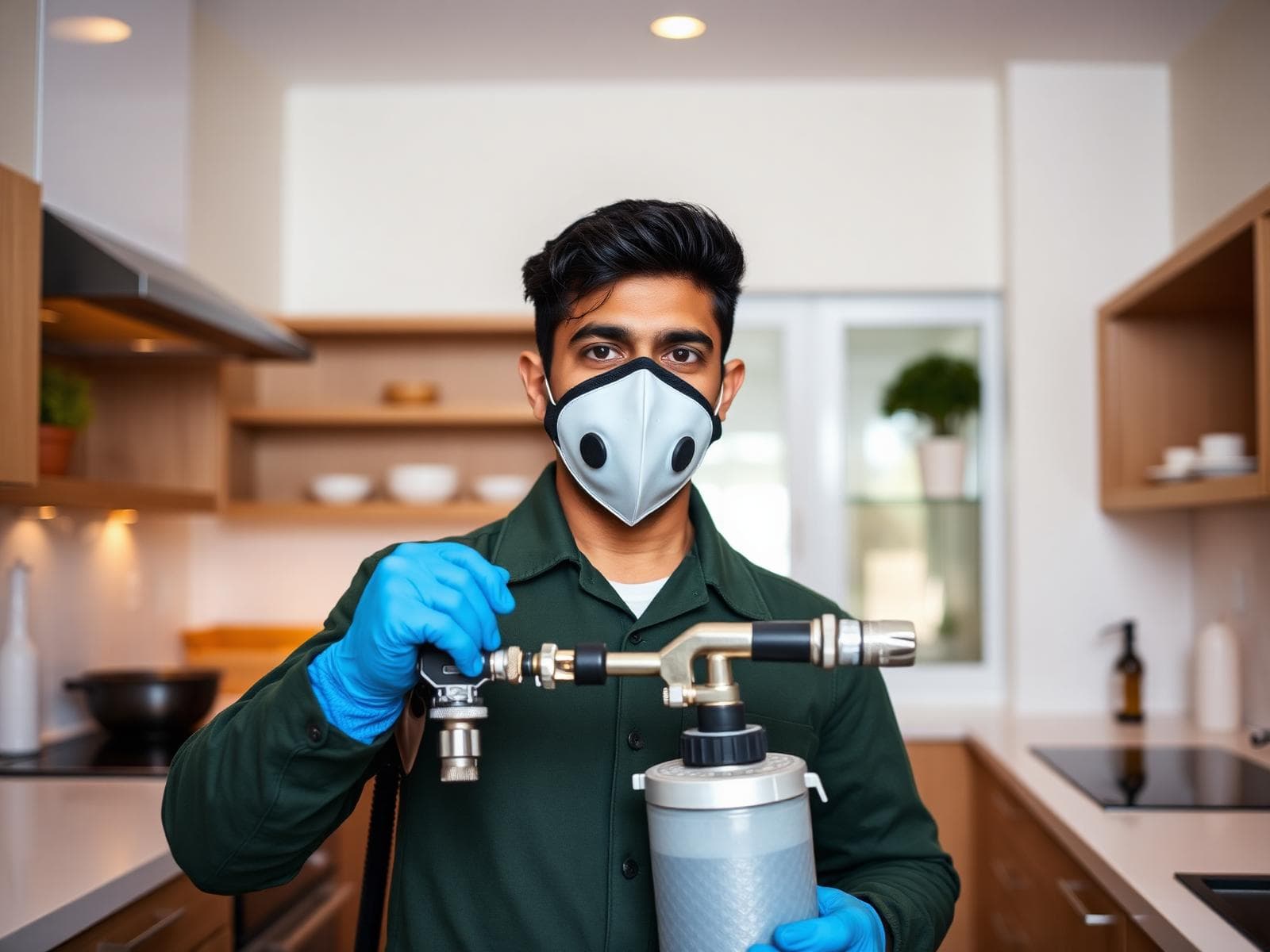
AIPS technician performing fly control
ServiceCIB · Family-safe

Fly Control in Kolkata & West Bengal

Bait, ILT and residual programme for kitchens, dairies and food-processing plants.

Overview

What our fly protocol does

Fly Control at AIPS is delivered by trained, in-house technicians using CIB-approved, family-safe chemistry. From the first inspection to the final follow-up, every step of our fly protocol is documented, so you know exactly what was applied, where and why.

CIB-approved, label-rate chemistry — safe around children and pets

Same trained technician on every follow-up visit

No fogging, no strong odour, no need to leave the home for hours

Detailed job report and MSDS on request

Book a free inspection

Tell us what you need — we'll call you back within business hours.

No OTP. No spam. We use your number only to call you back.

Signs you need this service

  • Live fly activity in kitchens, bathrooms or storage areas
  • Droppings, shed skins or trails along skirtings and cabinets
  • Damage to furniture, food packaging, fabric or wiring
  • Musty odour or unusual sounds at night
  • Repeat sightings even after DIY sprays

Health & property risks

  • Contamination of food, utensils and drinking water
  • Allergies, asthma triggers and skin reactions for children and elderly
  • Structural or fabric damage that quietly compounds over months
  • Loss of business reputation for restaurants, hotels and clinics
Untreated flyproblems compound month after month. A single inspection tells you exactly what you're dealing with.
Our scientific approach

How AIPS delivers fly treatment

Inspection first, chemistry second. Every step is documented so nothing is left to guesswork.

  1. 01

    Inspection & assessment

    Sanitation audit — the real fix for flies

  2. 02

    Targeted treatment

    ILT (insect light trap) placement for indoor catch

  3. 03

    Follow-up & prevention

    Residual spray at bin and drain zones

The science behind the treatment

Biology and Management of Flies

Flies are among the most important public health pests because they contaminate food and surfaces with disease-causing microorganisms. They are mechanical vectors of numerous pathogens and are major pests in homes, restaurants, hospitals, food processing industries, dairy plants, pharmaceutical facilities and livestock farms. The house fly (Musca domestica) is the most common and economically important fly species worldwide.

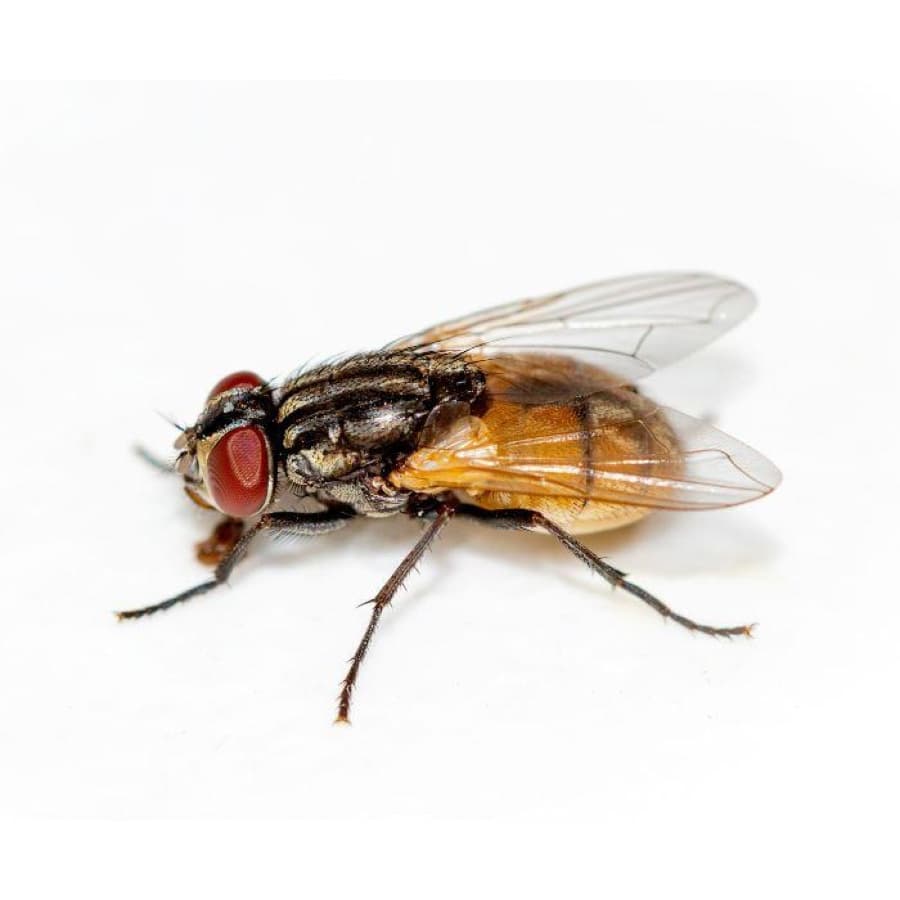
The house fly (Musca domestica) — grey body with four dark longitudinal stripes, the most common domestic fly species.
Kingdom: AnimaliaPhylum: ArthropodaClass: InsectaOrder: DipteraFamily: Muscidae — common species: Musca domestica (house fly)

The house fly (Musca domestica) — grey body with four dark longitudinal stripes, the most common domestic fly species.

Life cycle

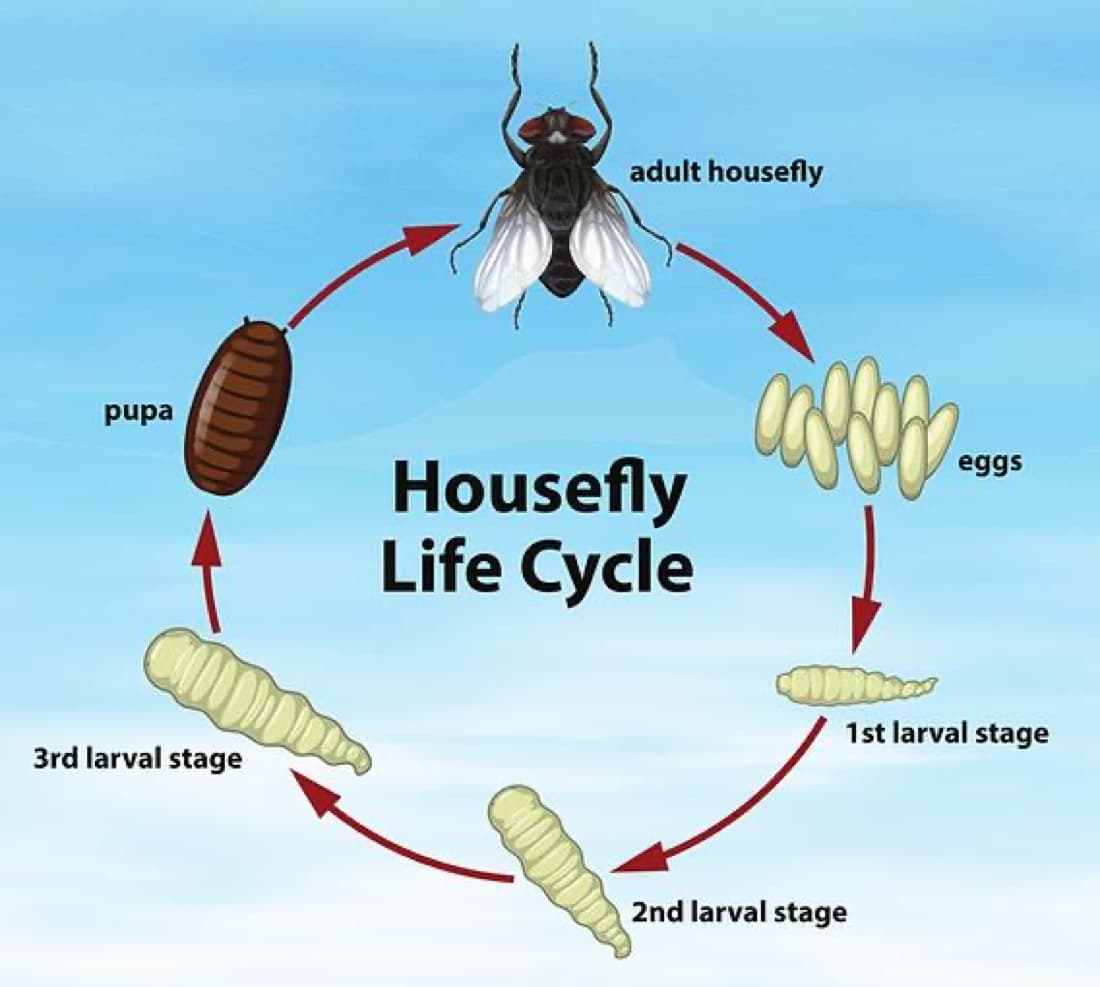
Egg → larva (three instars) → pupa → adult — complete metamorphosis in as little as a week.

Eggs per lifetime

400–600, hatching in 8–24 hours

Larval stage

3 instars over 3–7 days

Pupal stage

3–6 days to adult

Adult lifespan

2–4 weeks; reproductive within 2–3 days

Signs of infestation

  • Numerous adult flies indoors
  • Maggots in garbage or organic waste
  • Dark fly specks (faeces) on surfaces
  • Fly activity around windows and lights
  • Persistent nuisance around food preparation areas

Integrated management approach

Inspection

  • Garbage storage areas, drains and waste disposal points
  • Food preparation areas and loading docks
  • Manure storage, compost pits and external surroundings

Sanitation

  • Remove garbage daily and clean spills immediately
  • Keep waste bins covered; clean drains and grease traps
  • Dispose of decaying organic matter promptly

Exclusion

  • Insect-proof screens on doors and windows
  • Air curtains at entrances; keep doors closed when not in use
  • Seal gaps and cracks around entry points

Monitoring

  • Sticky fly ribbons, glue boards and baited fly traps
  • UV insect light traps (ILTs)
  • Routine fly count records and trend analysis

Mechanical & chemical control

  • UV light traps, electric fly killers and sticky traps
  • Residual sprays (deltamethrin, cypermethrin, lambda-cyhalothrin) on resting surfaces and external walls
  • Fly baits (imidacloprid, dinotefuran, acetamiprid, spinosad), placed away from food areas
  • Space sprays (ULV/fogging) for rapid knockdown during heavy infestations

Biological control

  • Parasitoid wasps (Muscidifurax spp., Spalangia spp.)
  • Predatory beetles and entomopathogenic fungi
  • Beneficial nematodes — especially useful in livestock and poultry facilities

Flies are significant public health pests capable of contaminating food and transmitting disease-causing microorganisms. Their rapid life cycle and prolific breeding require a comprehensive Integrated Fly Management (IFM) programme that combines sanitation, exclusion, source reduction, monitoring, biological methods and targeted chemical control. Regular inspections and good housekeeping remain the most effective long-term strategies for preventing fly infestations in residential, commercial and industrial environments.

Why AIPS

Built by agricultural scientists, not call-centre sales.

15+ years in the field

Founded 2010 · 40,000+ homes & businesses protected.
CIB-approved chemistry

Envu, FMC, Syngenta, UPL — strict label-rate dilutions only.

Same technician, every visit

Trained in-house for 90+ hrs. No sub-contractors.

Transparent reporting

Every visit ends with a written job report — what was applied, where and why.

FAQ

Fly Control — your questions, answered.

Book a free fly inspection today.

A trained AIPS technician will visit, inspect, quote — and only then treat. No pressure, no upsell.