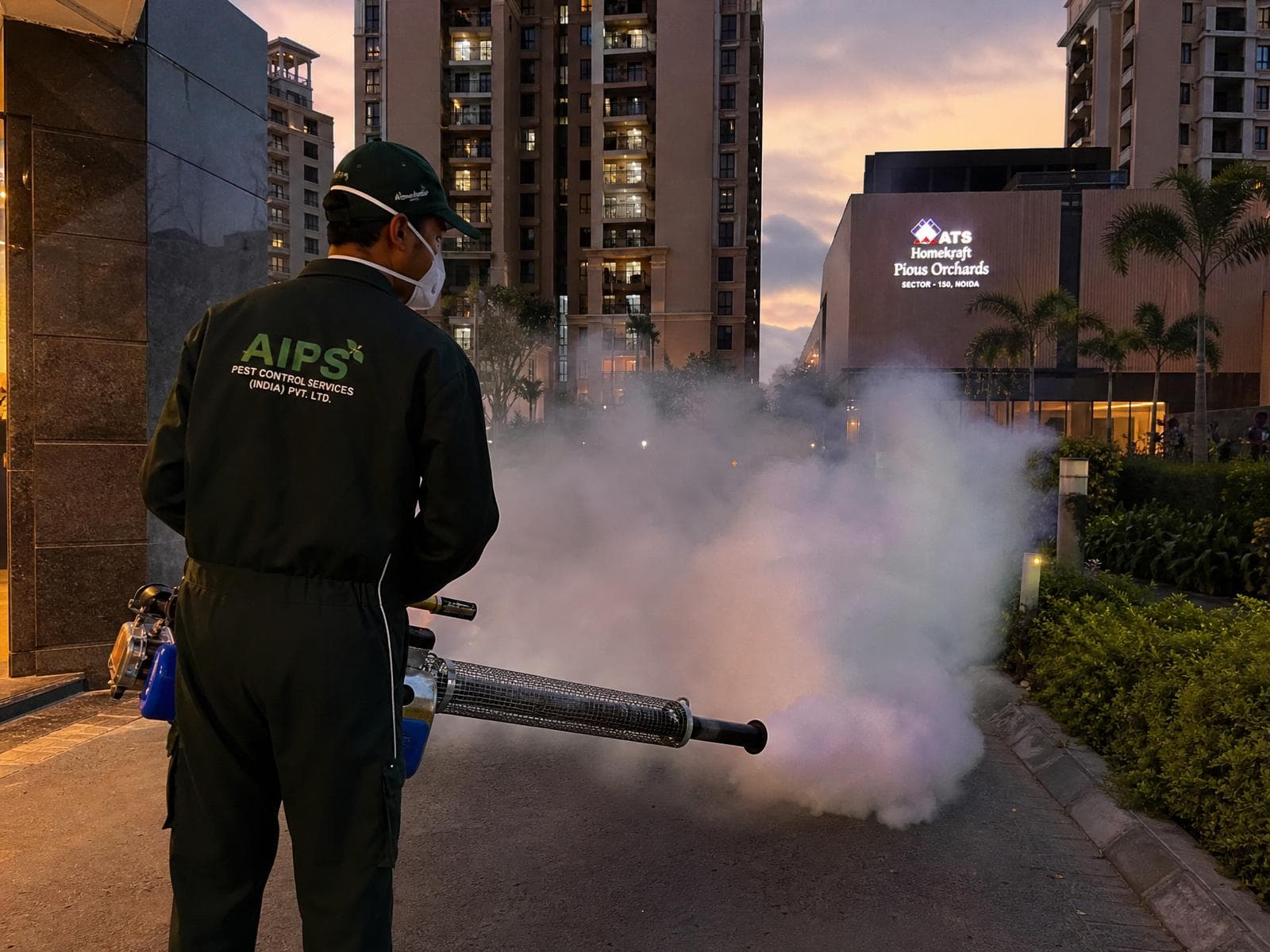
AIPS technician performing mosquito control
ServiceCIB · Family-safe

Mosquito Control in Kolkata & West Bengal

Larvicidal treatment at breeding sites plus outdoor residual mist — you can finally sleep without nets.

Overview

What our mosquito protocol does

Mosquito Control at AIPS is delivered by trained, in-house technicians using CIB-approved, family-safe chemistry. From the first inspection to the final follow-up, every step of our mosquito protocol is documented, so you know exactly what was applied, where and why.

CIB-approved, label-rate chemistry — safe around children and pets

Same trained technician on every follow-up visit

No fogging, no strong odour, no need to leave the home for hours

Detailed job report and MSDS on request

Book a free inspection

Tell us what you need — we'll call you back within business hours.

No OTP. No spam. We use your number only to call you back.

Signs you need this service

  • Live mosquito activity in kitchens, bathrooms or storage areas
  • Droppings, shed skins or trails along skirtings and cabinets
  • Damage to furniture, food packaging, fabric or wiring
  • Musty odour or unusual sounds at night
  • Repeat sightings even after DIY sprays
Health & property risks

  • Contamination of food, utensils and drinking water
  • Allergies, asthma triggers and skin reactions for children and elderly
  • Structural or fabric damage that quietly compounds over months
  • Loss of business reputation for restaurants, hotels and clinics
Untreated mosquitoproblems compound month after month. A single inspection tells you exactly what you're dealing with.
Our scientific approach

How AIPS delivers mosquito treatment

Inspection first, chemistry second. Every step is documented so nothing is left to guesswork.

  1. 01

    Inspection & assessment

    Standing-water audit and larvicide dosing

  2. 02

    Targeted treatment

    Residual mist on outdoor walls, drains and vegetation

  3. 03

    Follow-up & prevention

    Optional monthly AMC through monsoon

The science behind the treatment

Biology and Management of Mosquitoes

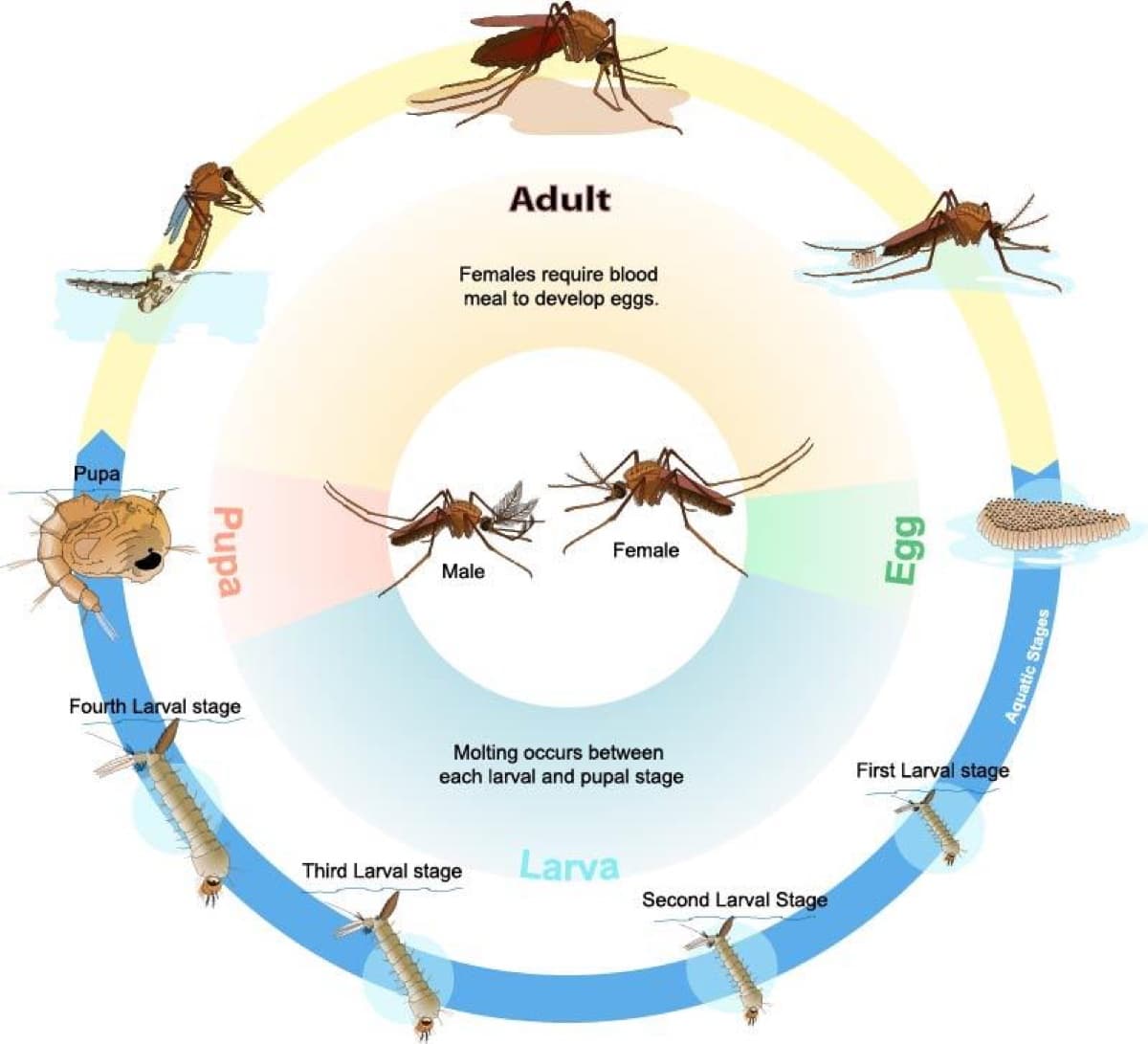
Mosquitoes are among the most medically important insects because they transmit numerous diseases affecting millions of people worldwide. Only female mosquitoes feed on blood, which is required for egg development. Mosquitoes are vectors of diseases such as malaria, dengue, chikungunya, Zika, yellow fever, Japanese encephalitis and lymphatic filariasis. Effective mosquito control requires an Integrated Vector Management (IVM) approach that combines environmental management, biological control, personal protection and judicious use of insecticides.

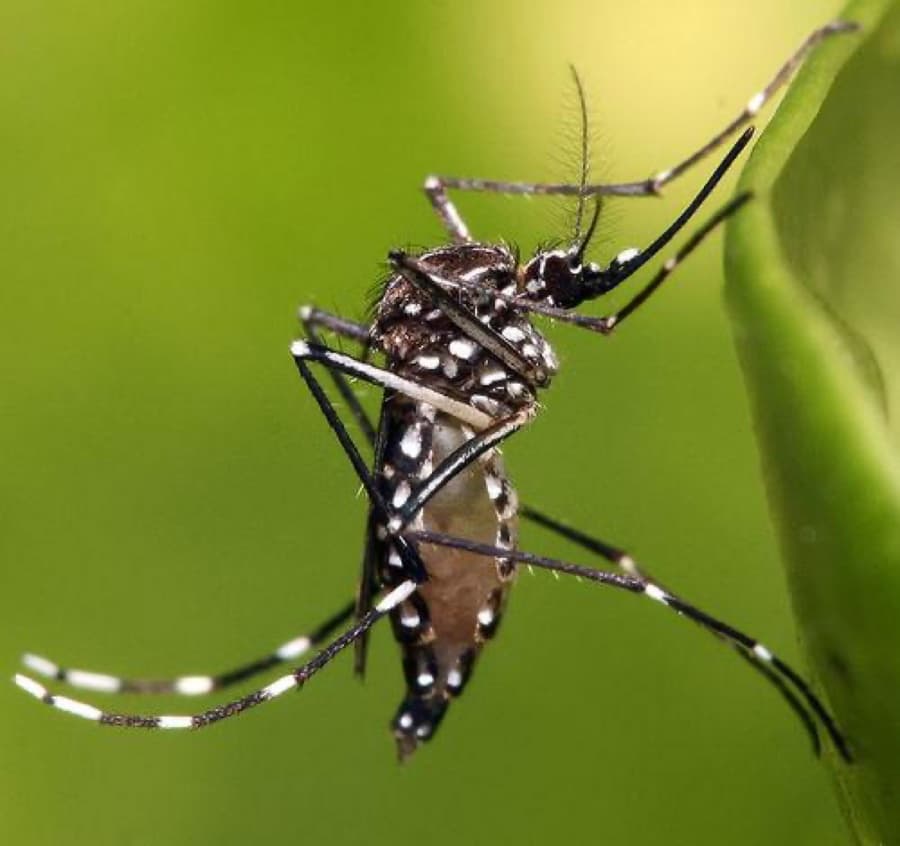
An Aedes mosquito — black body with distinctive white markings on the legs and body, a daytime biter and dengue vector.
Kingdom: AnimaliaPhylum: ArthropodaClass: InsectaOrder: DipteraFamily: Culicidae

An Aedes mosquito — black body with distinctive white markings on the legs and body, a daytime biter and dengue vector.

Life cycle

Egg → larva (4 instars) → pupa → adult — complete metamorphosis, with three aquatic stages.

Eggs per batch

Aedes: 100–200 · Culex: laid in rafts

Larval stage

4 instars, aquatic and actively feeding

Pupal stage

2–3 days to adult, does not feed

Adult lifespan

2–4 weeks; females mate and blood-feed within days

Signs of infestation

  • Presence of stagnant water nearby
  • Larvae ('wrigglers') visible in water containers
  • Pupae ('tumblers') at the water surface
  • Increased adult activity at dawn, dusk or night, depending on species

Integrated management approach

Surveillance

  • Identify mosquito species and survey breeding sites
  • Monitor adult populations and record seasonal trends

Source reduction

  • Drain stagnant water; empty and scrub containers weekly
  • Cover overhead tanks and dispose of tyres, cans and containers that collect water
  • Maintain drainage and clean roof gutters

Biological control

  • Larvivorous fish (Gambusia, Poecilia)
  • Bacillus thuringiensis israelensis (Bti) and Bacillus sphaericus
  • Dragonfly nymphs in natural habitats

Larval control

  • Approved larvicides applied where source reduction is not possible
  • Common larvicides: temephos, pyriproxyfen (IGR), Bti formulations

Adult mosquito control

  • Residual spraying on walls and dark resting places — deltamethrin, lambda-cyhalothrin, alpha-cypermethrin
  • Space spraying (ULV/fogging) for rapid knockdown during outbreaks or heavy infestations
  • Most effective when combined with larval source management

Personal protection

  • Insecticide-treated nets (ITNs/LLINs) and window/door screens
  • Long-sleeved clothing and repellents containing DEET, picaridin or IR3535
  • Electric vaporisers and mosquito coils per manufacturer instructions

Mosquitoes are major vectors of serious human diseases and pose a significant public health challenge. Their control depends on an Integrated Vector Management (IVM) programme that emphasises surveillance, elimination of breeding sites, biological and larval control, responsible insecticide use and personal protection. Community participation, environmental sanitation and regular monitoring are essential for sustainable mosquito management and reducing the burden of mosquito-borne diseases.

Why AIPS

Built by agricultural scientists, not call-centre sales.

15+ years in the field

Founded 2010 · 40,000+ homes & businesses protected.

CIB-approved chemistry

Envu, FMC, Syngenta, UPL — strict label-rate dilutions only.

Same technician, every visit

Trained in-house for 90+ hrs. No sub-contractors.

Transparent reporting

Every visit ends with a written job report — what was applied, where and why.

FAQ

Mosquito Control — your questions, answered.

Book a free mosquito inspection today.

A trained AIPS technician will visit, inspect, quote — and only then treat. No pressure, no upsell.