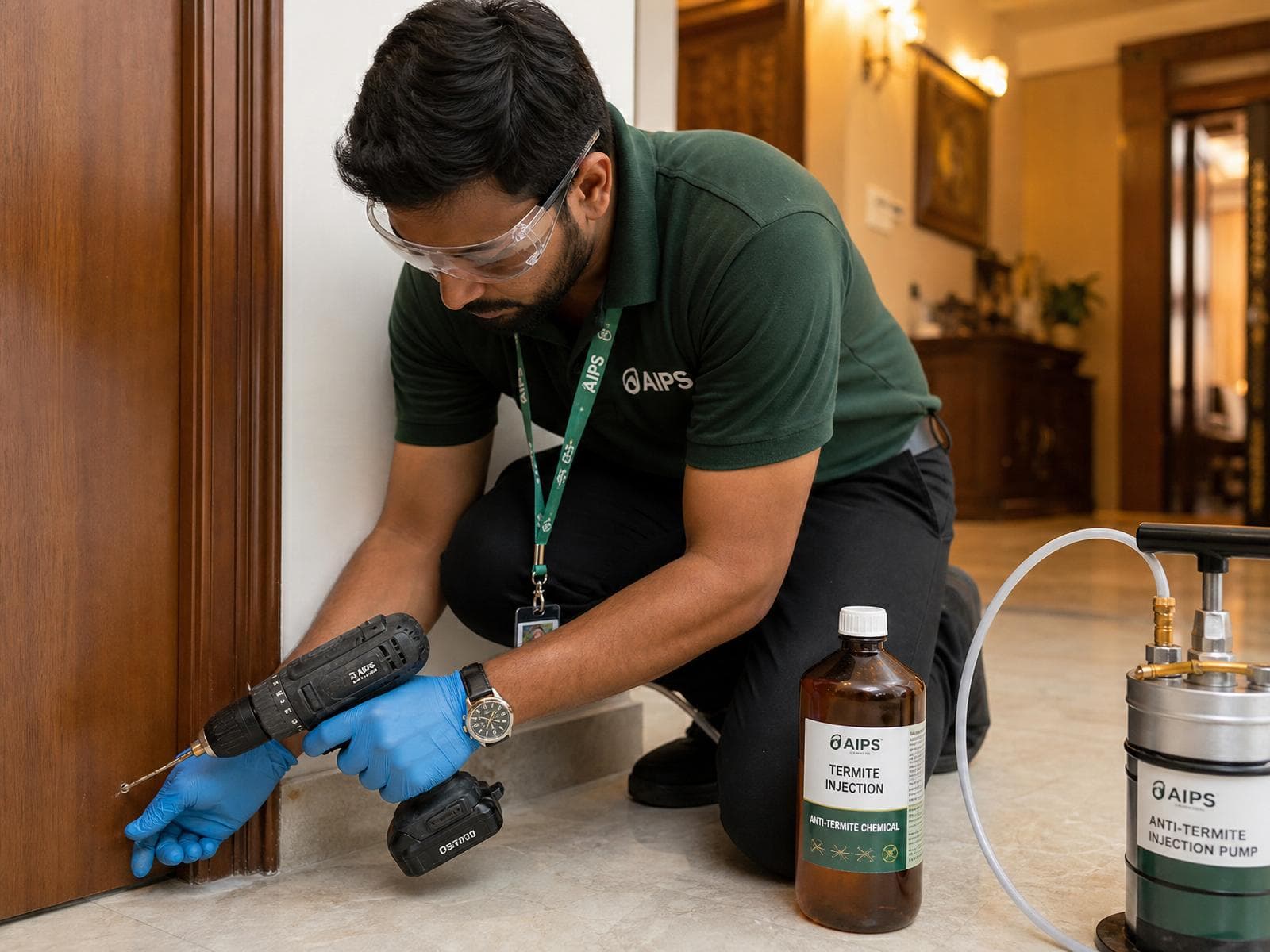
AIPS technician performing termite control
ServiceCIB · Family-safe

Termite Control in Kolkata & West Bengal

Drill-and-inject anti-termite treatment with CIB-approved chemistry, applied with precision at every floor-wall junction.

Overview

What our termite protocol does

Termite Control at AIPS is delivered by trained, in-house technicians using CIB-approved, family-safe chemistry. From the first inspection to the final follow-up, every step of our termite protocol is documented, so you know exactly what was applied, where and why.

CIB-approved, label-rate chemistry — safe around children and pets

Same trained technician on every follow-up visit

No fogging, no strong odour, no need to leave the home for hours

Detailed job report and MSDS on request

Book a free inspection

Tell us what you need — we'll call you back within business hours.

No OTP. No spam. We use your number only to call you back.

Featured product

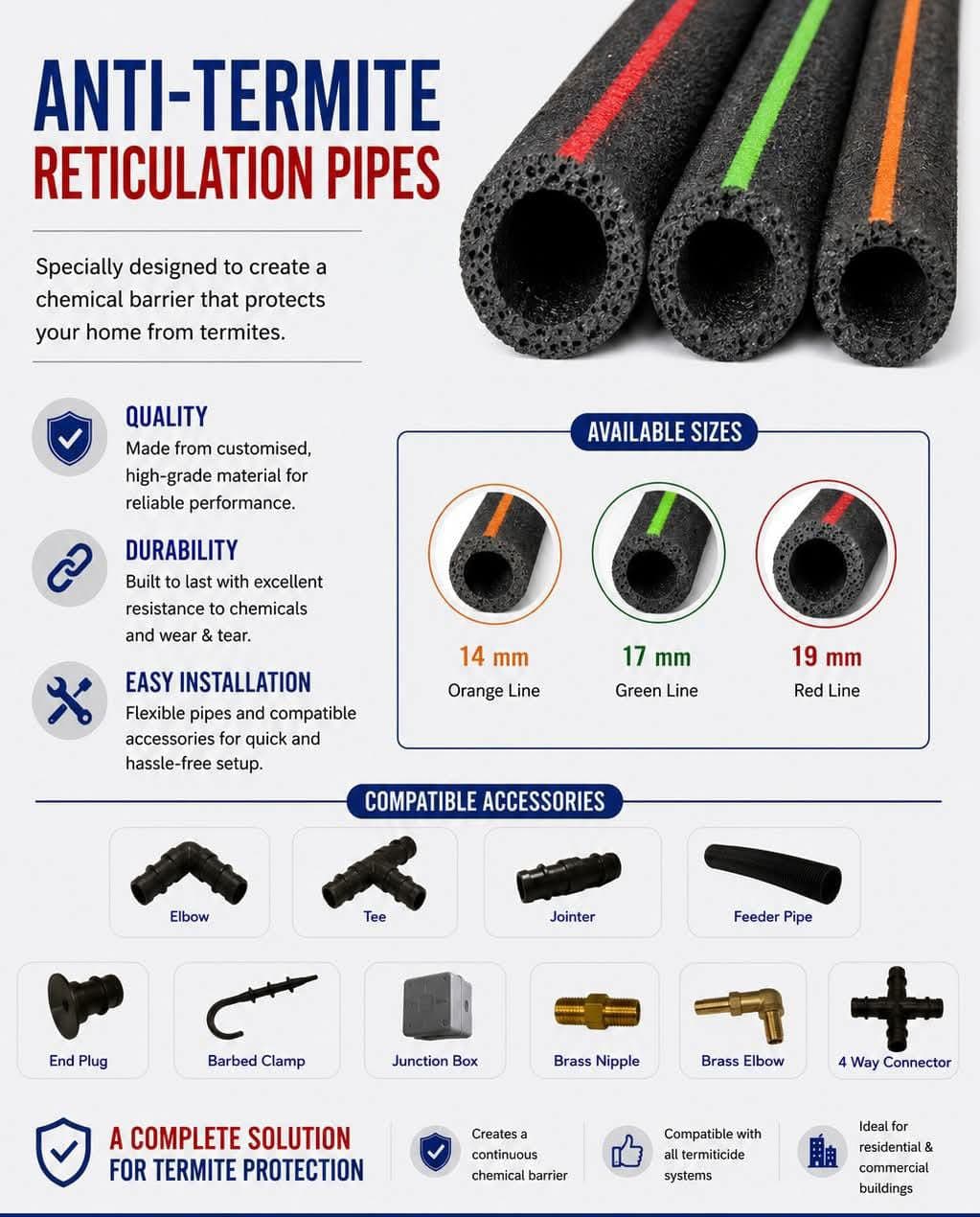
Anti-termite reticulation pipes

Anti-termite reticulation pipes

For new builds, we install a reticulation pipe network in the foundation during construction — a permanent, re-treatable chemical barrier around the building, in 14mm, 17mm and 19mm sizes with compatible elbows, tees, jointers and feeder pipes.

Signs you need this service

  • Live termite activity in kitchens, bathrooms or storage areas
  • Droppings, shed skins or trails along skirtings and cabinets
  • Damage to furniture, food packaging, fabric or wiring
  • Musty odour or unusual sounds at night
  • Repeat sightings even after DIY sprays
Health & property risks

  • Contamination of food, utensils and drinking water
  • Allergies, asthma triggers and skin reactions for children and elderly
  • Structural or fabric damage that quietly compounds over months
  • Loss of business reputation for restaurants, hotels and clinics
Untreated termiteproblems compound month after month. A single inspection tells you exactly what you're dealing with.
Our scientific approach

How AIPS delivers termite treatment

Inspection first, chemistry second. Every step is documented so nothing is left to guesswork.

  1. 01

    Inspection & assessment

    Perimeter and internal drill points at floor-wall junctions

  2. 02

    Targeted treatment

    Chlorpyrifos or Fipronil dilution to strict label rate

  3. 03

    Follow-up & prevention

    Pre-construction pipe-injection for new builds

The science behind the treatment

Biology and Management of Termites

Termites are social insects belonging to the order Blattodea (formerly classified separately as Isoptera). They play an important ecological role by decomposing cellulose in dead wood and plant material. However, termites are among the most destructive structural pests, causing extensive damage to buildings, furniture, books, packaging materials and crops.

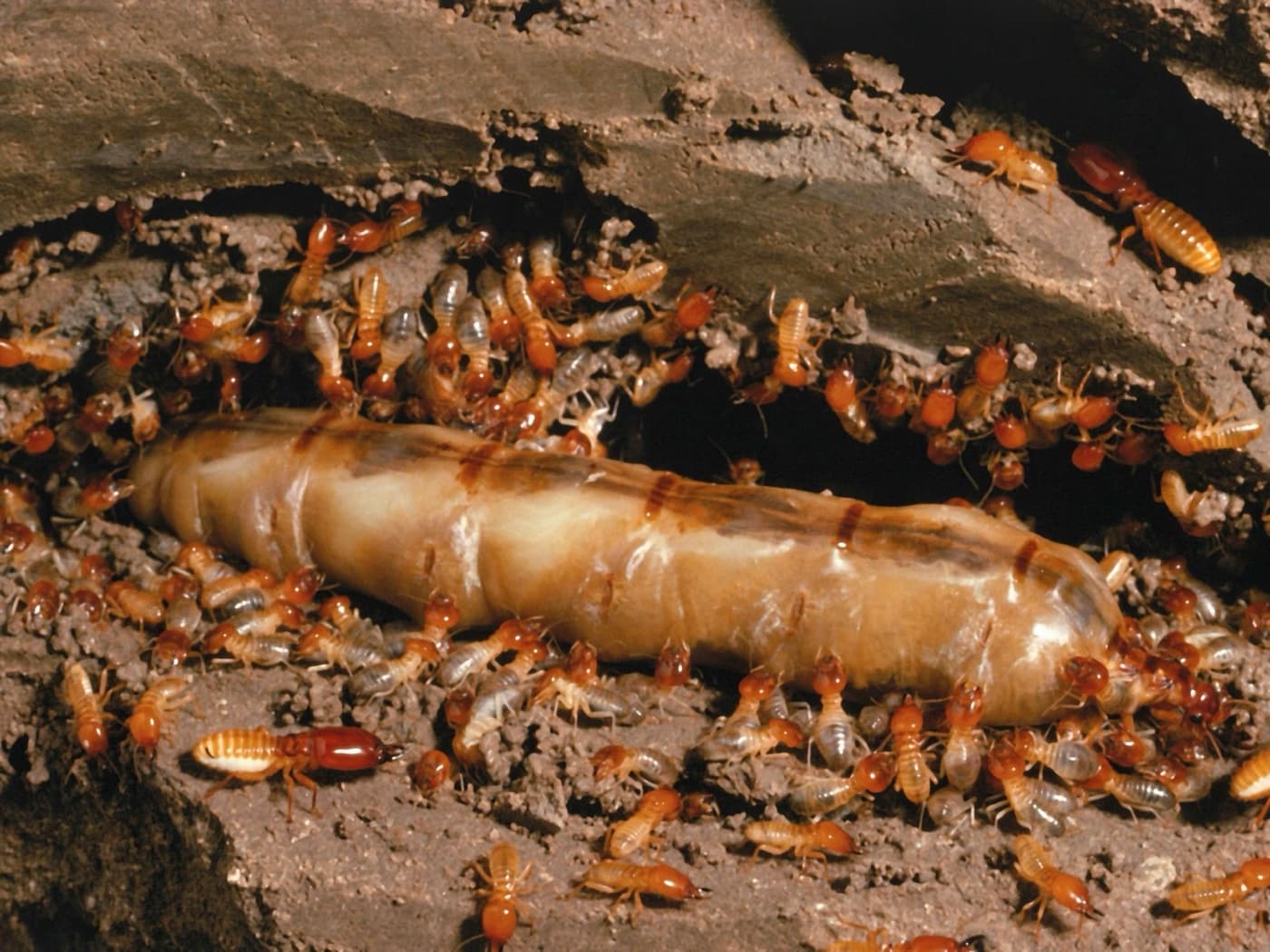
A subterranean termite colony — workers and soldiers tending the queen inside a mud gallery.
Kingdom: AnimaliaPhylum: ArthropodaClass: InsectaOrder: BlattodeaFamily: Infraorder Isoptera

A subterranean termite colony — workers and soldiers tending the queen inside a mud gallery.

Life cycle

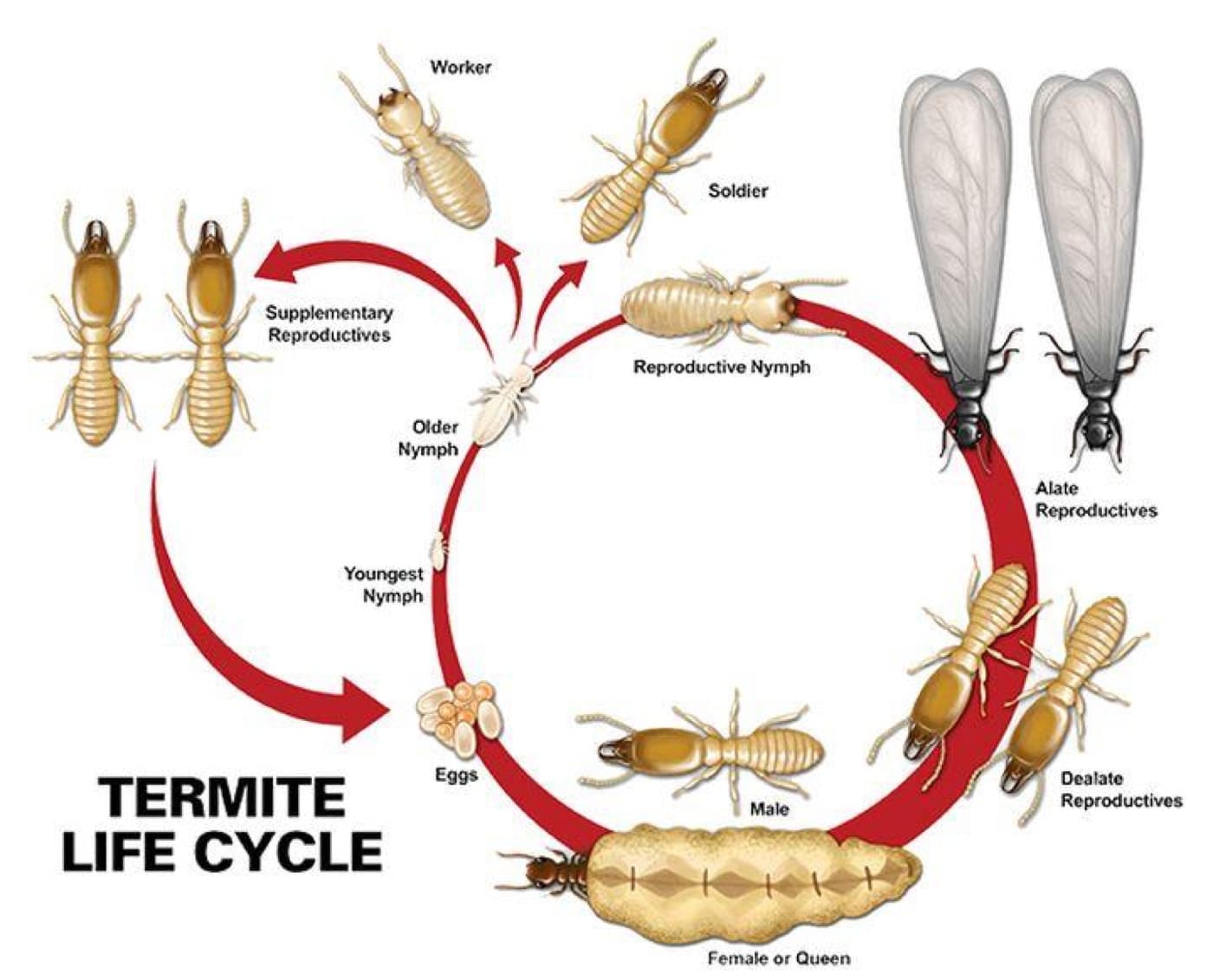
Egg → nymph → worker, soldier or reproductive alate — the full termite life cycle.

Egg incubation

2–4 weeks

Colony establishment

Several months

Mature colony

3–5 years

Queen lifespan

Up to 20 years

Signs of infestation

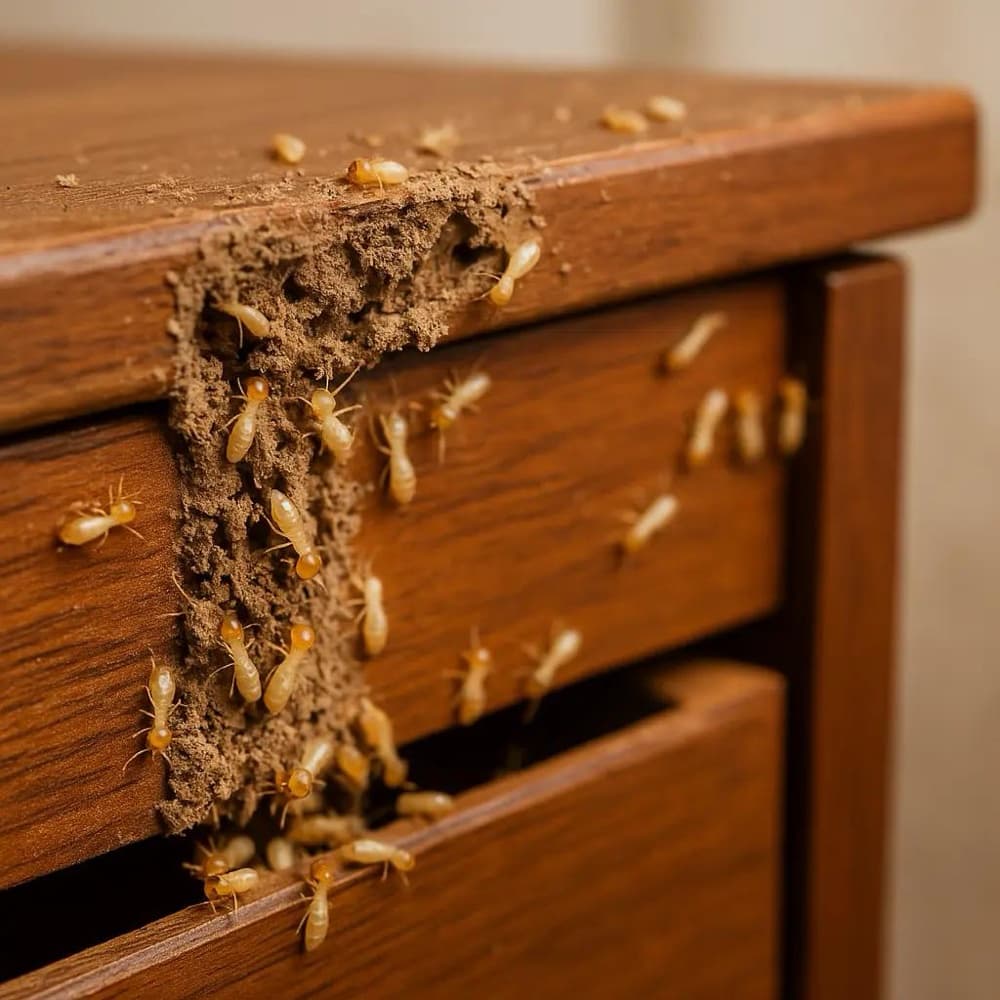
Active termite activity and mud shelter tubes on wooden furniture — a clear sign of infestation.
  • Mud tubes running along walls or foundations
  • Hollow-sounding wood when tapped
  • Blistered or bubbling paint
  • Winged termites (swarmers) indoors, or discarded wings near windowsills
  • Frass (drywood termite pellets) below wooden fixtures
  • Sagging doors, windows or skirting boards

Integrated management approach

Inspection

  • Foundation, wall-floor junctions and expansion joints
  • Wooden structures, furniture and roof timber
  • Utility entry points and moisture-prone areas

Preventive measures

  • Eliminate wood-to-soil contact
  • Repair plumbing leaks and improve drainage
  • Maintain ventilation and remove tree stumps
  • Seal cracks and crevices
  • Install physical termite barriers during construction

Monitoring

  • Termite monitoring stations and wooden inspection stakes
  • Moisture meters
  • Regular professional inspections

Chemical control — pre-construction

  • Soil treatment before the foundation is laid
  • Plinth filling and external perimeter treatment
  • Expansion joint treatment
  • Common termiticides: fipronil, imidacloprid, chlorantraniliprole

Chemical control — post-construction

  • Drilling and chemical injection at floor-wall junctions
  • Soil rodding and perimeter trench treatment
  • Wood injection for infested timber

Baiting systems

  • Slow-acting insecticide baits carried back to the colony by workers
  • Eliminates the entire colony, including the queen
  • Low pesticide usage and long-term monitoring

Wood protection

  • Borate wood preservatives and pressure-treated timber
  • Protective coatings and anti-termite paints

Termites are among the most economically significant structural pests worldwide. Effective management relies on early detection, preventive construction practices, moisture management, regular inspections and Integrated Termite Management (ITM) using a combination of physical, biological and chemical control measures. A well-planned programme minimises structural damage while reducing unnecessary pesticide use, ensuring long-term protection of buildings and wooden assets.

Why AIPS

Built by agricultural scientists, not call-centre sales.

15+ years in the field

Founded 2010 · 40,000+ homes & businesses protected.

CIB-approved chemistry

Envu, FMC, Syngenta, UPL — strict label-rate dilutions only.

Same technician, every visit

Trained in-house for 90+ hrs. No sub-contractors.

Transparent reporting

Every visit ends with a written job report — what was applied, where and why.

FAQ

Termite Control — your questions, answered.

Book a free termite inspection today.

A trained AIPS technician will visit, inspect, quote — and only then treat. No pressure, no upsell.