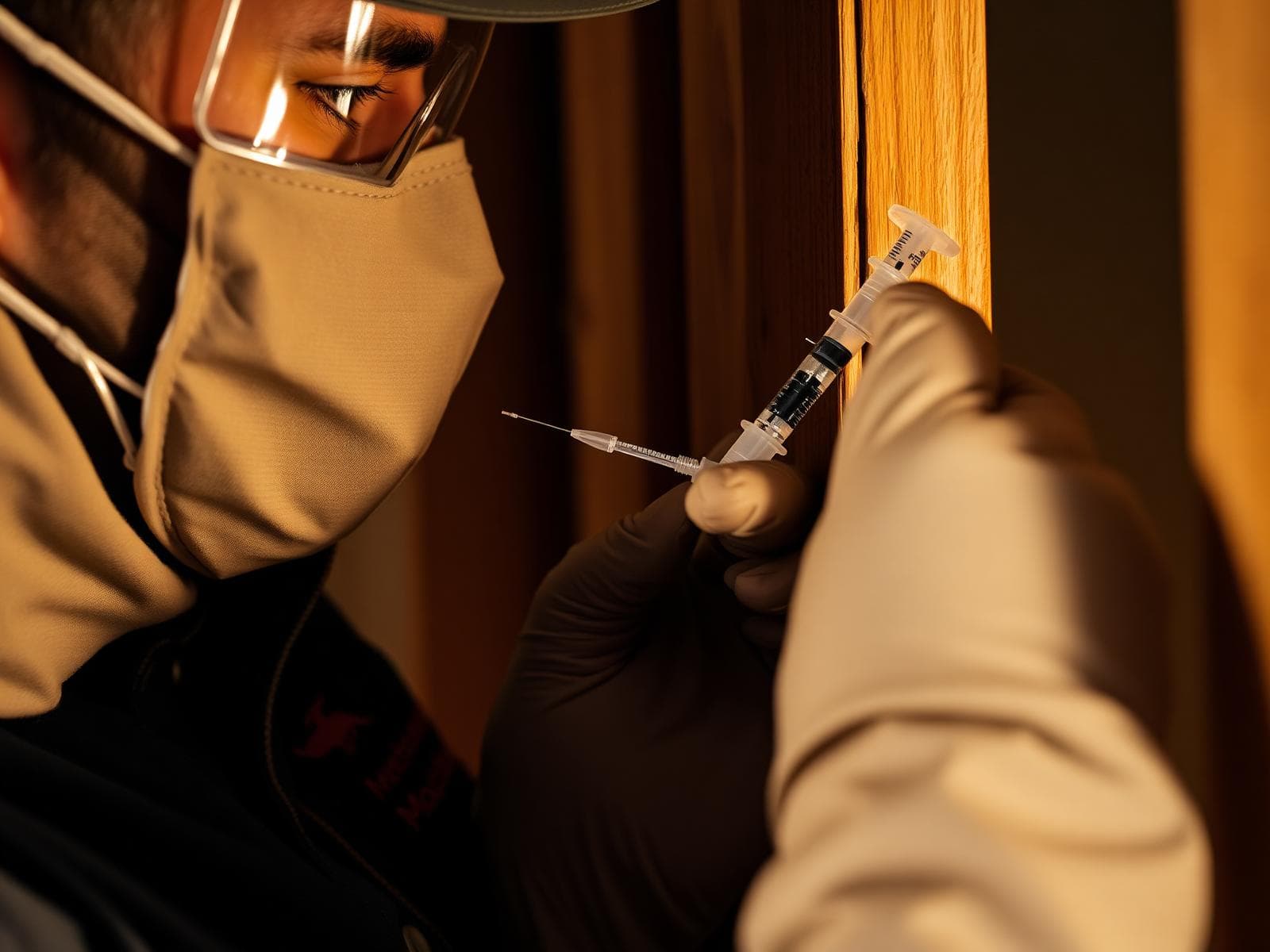
AIPS technician performing wood borer control
ServiceCIB · Family-safe

Wood Borer Control in Kolkata & West Bengal

Targeted injection-and-seal treatment for powder-post beetles, old-house borers and death-watch beetles — protects furniture, door frames, beams and antiques from within.

Overview

What our wood borer protocol does

Wood borers are beetles — not termites — but the damage they cause looks similar. Their larvae tunnel deep inside furniture, door frames, beams and antiques, weakening the wood from the inside out. At AIPS, our wood borer control programme is built to reach the larvae inside the timber, not just the surface. Every treatment starts with species identification (powder-post beetle, old-house borer or death-watch beetle) so the right chemistry reaches the right larvae, the first time.

Species-specific injection reaches larvae hidden deep inside the timber

CIB-approved borer chemistry — safe for indoor furniture and cupboards

Protective sealer coat prevents fresh egg-laying on exposed wood

Follow-up inspection at day 45 to confirm zero activity

Detailed report showing every treated item and product used

Book a free inspection

Tell us what you need — we'll call you back within business hours.

No OTP. No spam. We use your number only to call you back.

Signs you need this service

  • Small round exit holes (1–2 mm) on furniture, door frames, beams or plywood
  • Fine powdery dust (frass) collecting under wooden items or in drawers
  • Faint tapping or clicking sounds from within the wood, usually at night
  • Weak, hollow or crumbling wood — sagging beams or soft patches on furniture
  • Repeat holes appearing after DIY polish or surface sprays
Health & property risks

  • Structural weakening of beams, staircases, door frames and heritage woodwork
  • Irreversible damage to antiques, musical instruments and imported furniture
  • Spread from a single infested piece to every wooden item in the room
  • Costly carpentry and replacement bills when damage is discovered too late
Untreated wood borerproblems compound month after month. A single inspection tells you exactly what you're dealing with.
Our scientific approach

How AIPS delivers wood borer treatment

Inspection first, chemistry second. Every step is documented so nothing is left to guesswork.

  1. 01

    Inspection & assessment

    Full inspection to identify borer species, exit-hole pattern and infestation stage

  2. 02

    Targeted treatment

    Direct injection of anti-borer chemistry into every exit hole

  3. 03

    Follow-up & prevention

    Surface coat with protective borer-resistant sealer on exposed timber

  4. 04

    Reporting & documentation

    Follow-up inspection at day 45 and preventive advice for humidity control

The science behind the treatment

Biology and Management of Wood Borers

Wood borers are beetles whose larvae tunnel deep inside timber, weakening furniture, beams and antiques from within long before any damage is visible on the surface. Because different species attack different types of wood over very different timeframes, correct identification during inspection is what determines the right treatment.

Kingdom: AnimaliaPhylum: ArthropodaClass: InsectaOrder: ColeopteraFamily: Bostrichidae / Anobiidae / Cerambycidae

Life cycle

Powder-post beetle

~1–2 years, egg to adult

Death-watch beetle

2–10 years in older timber

Old-house borer

3–10 years

Signs of infestation

  • Small round exit holes (1–2 mm) on furniture, door frames, beams or plywood
  • Fine powdery dust (frass) collecting under wooden items or in drawers
  • Faint tapping or clicking sounds from within the wood, usually at night
  • Weak, hollow or crumbling wood — sagging beams or soft patches on furniture
  • Repeat holes appearing after DIY polish or surface sprays
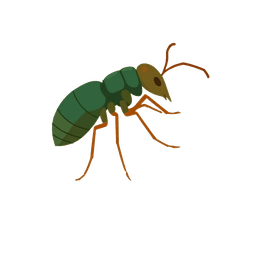
Integrated management approach

Inspection

  • Moisture meter reading and exit-hole mapping across all wooden items
  • Species identification — powder-post, death-watch or old-house borer

Preventive measures

  • Moisture control — dry timber is far less attractive to borers
  • Use of seasoned or pre-treated timber in new construction
  • Adequate ventilation around wooden fixtures

Monitoring

  • Annual inspection of heritage or valuable timber
  • Tap-testing to detect hollow sections early

Chemical control

  • Direct injection of anti-borer chemistry into every exit hole
  • Surface coat with a protective borer-resistant sealer on exposed timber
  • Fumigation reserved for severe or high-value antique infestations

Wood protection

  • Borate wood preservatives
  • Pressure-treated timber for new builds
  • Protective coatings and anti-borer paints

Because wood borer larvae live and feed entirely inside the timber, surface sprays and polishes never reach the source of the problem — which is why repeat holes keep appearing after DIY treatment. Species-specific injection reaches the larvae where they actually are, and a protective sealer coat stops fresh egg-laying from starting the cycle again.

Why AIPS

Built by agricultural scientists, not call-centre sales.

15+ years in the field

Founded 2010 · 40,000+ homes & businesses protected.

CIB-approved chemistry

Envu, FMC, Syngenta, UPL — strict label-rate dilutions only.

Same technician, every visit

Trained in-house for 90+ hrs. No sub-contractors.

Transparent reporting

Every visit ends with a written job report — what was applied, where and why.

FAQ

Wood Borer Control — your questions, answered.

Book a free wood borer inspection today.

A trained AIPS technician will visit, inspect, quote — and only then treat. No pressure, no upsell.